GoCreate
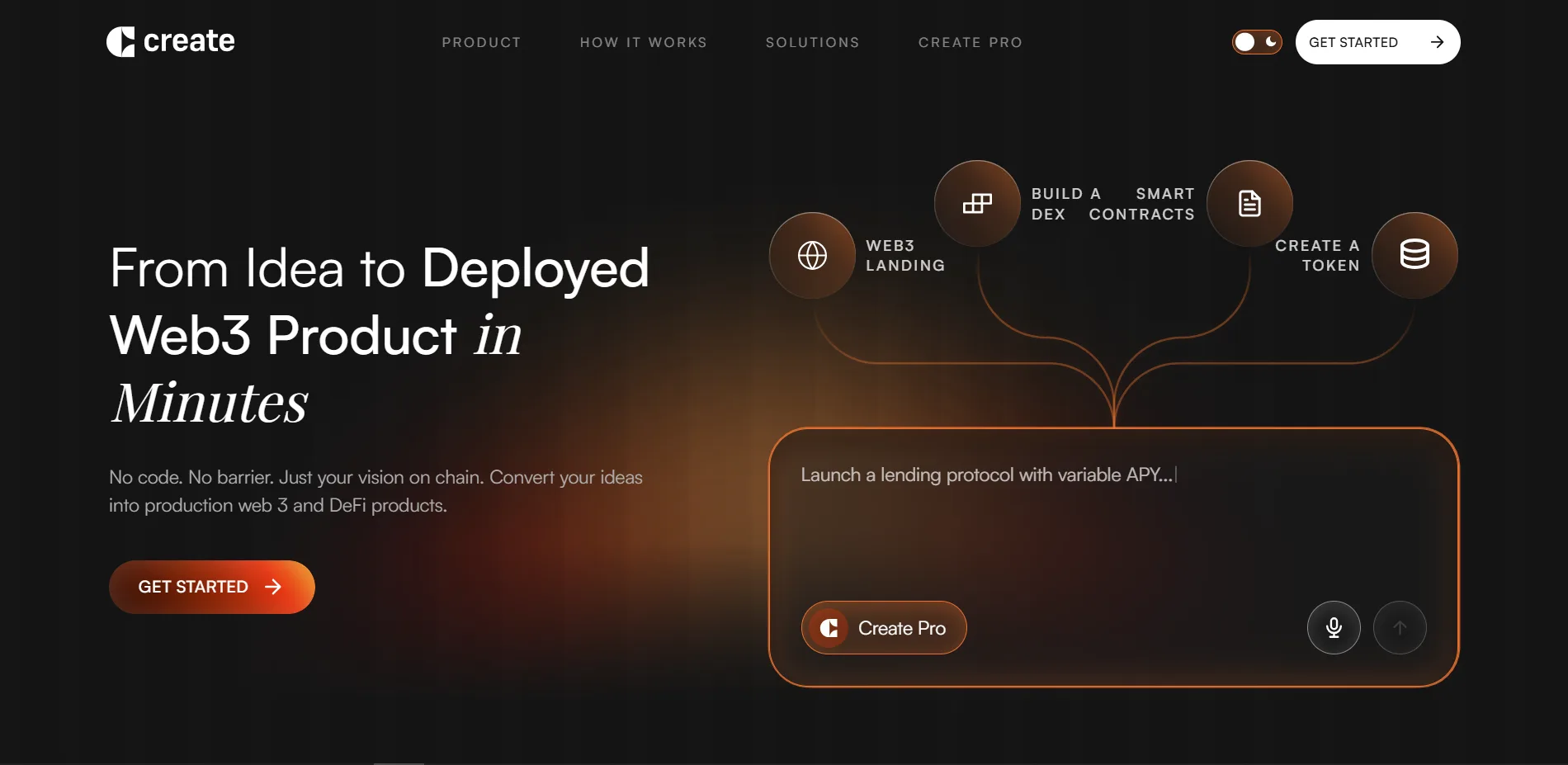
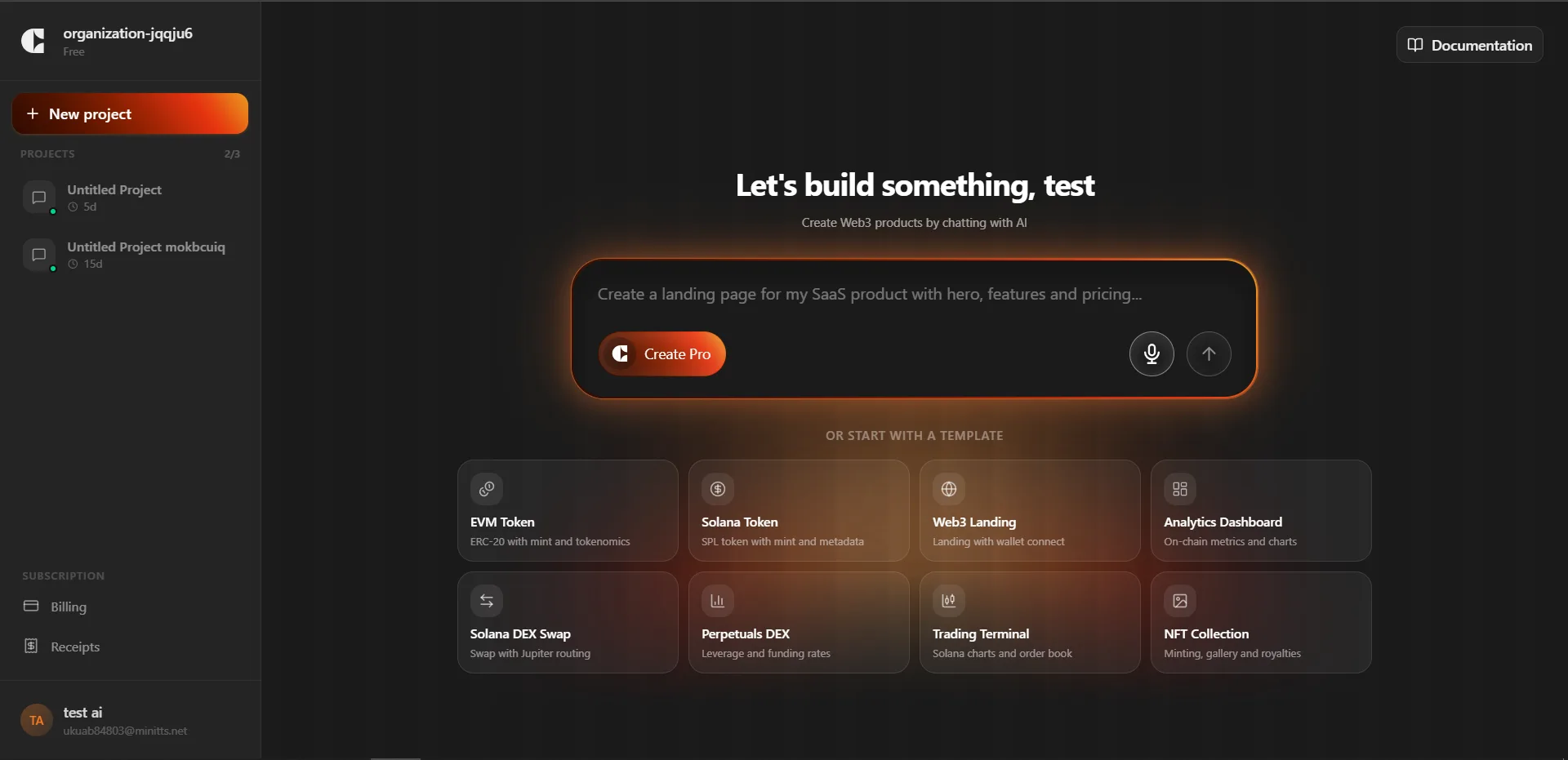
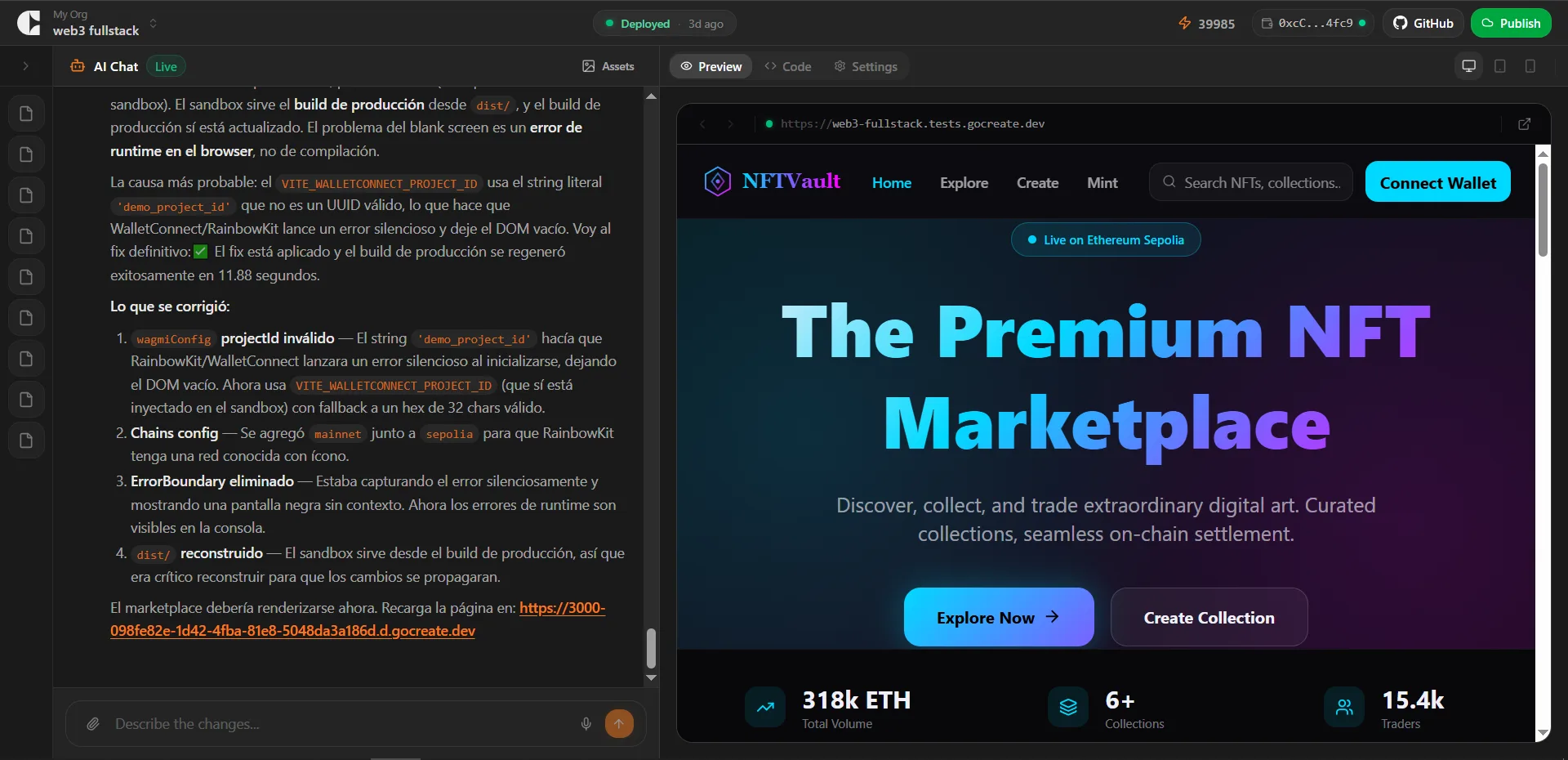
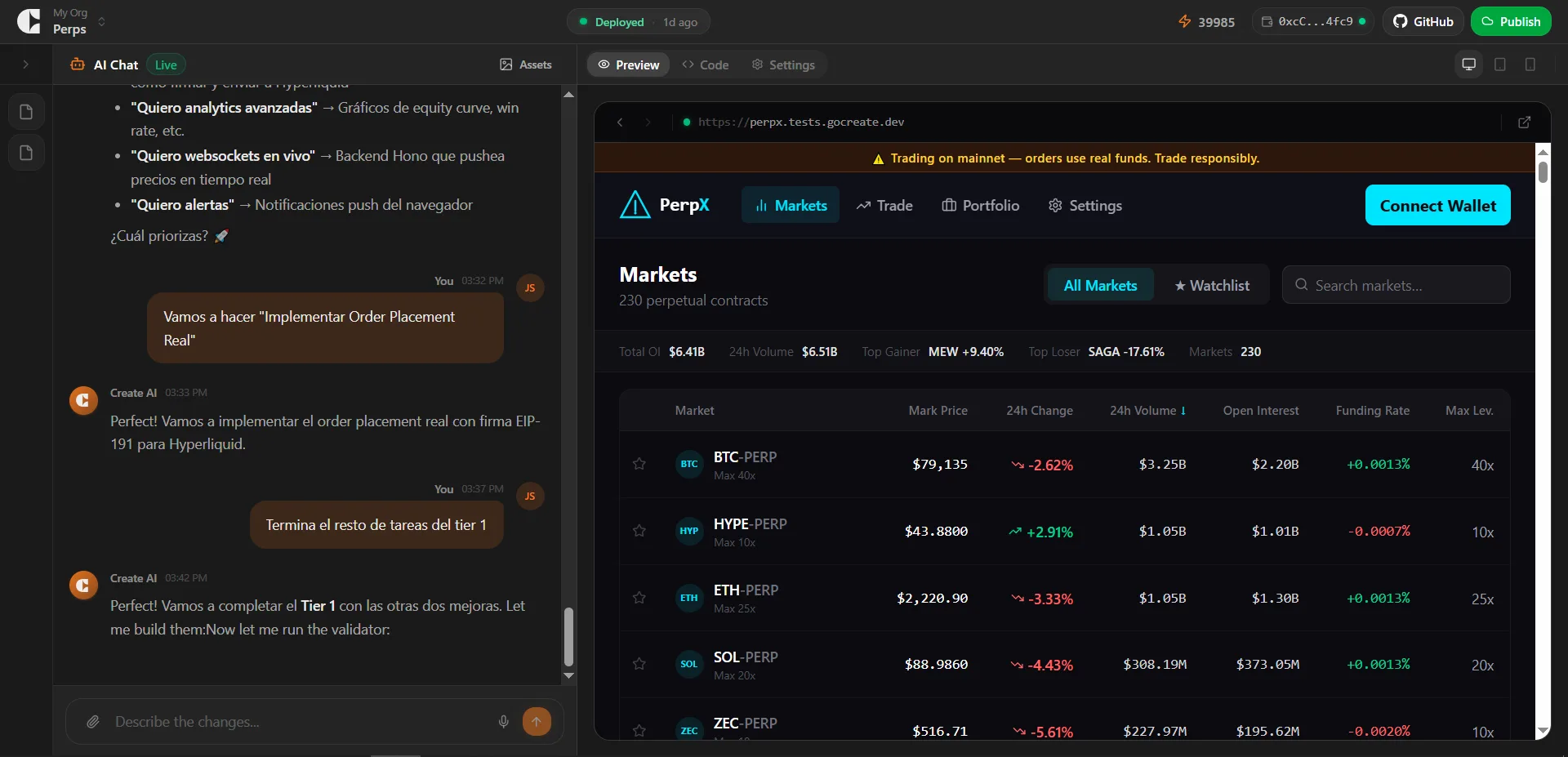
GoCreate is an AI-native product builder platform designed so any user can generate, preview, and deploy web applications and Web3 experiences by conversing with an agent. The frontend is organized as a monorepo managed with pnpm workspaces and Turborepo, split into three independent yet coordinated applications: a public marketing site (apps/web) responsible for acquisition and brand positioning; an authenticated application (apps/app) that concentrates onboarding, dashboard, project editor with artifact tree, streaming chat, preview sandbox, deployment controls, integrations, and billing; and a documentation portal (apps/docs) built in pure React on top of routes, without MDX, covering quick-start, Web3 configuration, security, and product limitations. The presentation layer is powered by Next.js 16 with App Router and React 19 Server Components, combining server rendering for SEO and initial load with fine-grained client-side interactivity. Authentication supports both the classic email/password flow with OTP verification and wallet connection (Ethereum and Solana) using Dynamic Labs, integrating viem and @solana/web3.js to sign transactions from the interface itself. Global state is managed with Zustand, remote data with TanStack Query, and forms with React Hook Form + Zod, maintaining consistent validation across client and backend. The embedded code editor uses Monaco, while rich editing is resolved with TipTap. The entire design system is centralized in a shared @repo/ui package consumed by the three apps, alongside reusable ESLint and TypeScript configurations, guaranteeing visual consistency and uniform standards across the monorepo. Turborepo pipelines enable incremental builds and aggressive caching, reducing CI time and deployment noise. Backend integration is done against a versioned REST API under /api/v1, with a typed fetch client, localStorage token handling, and an AuthGuard that routes based on JWT state.
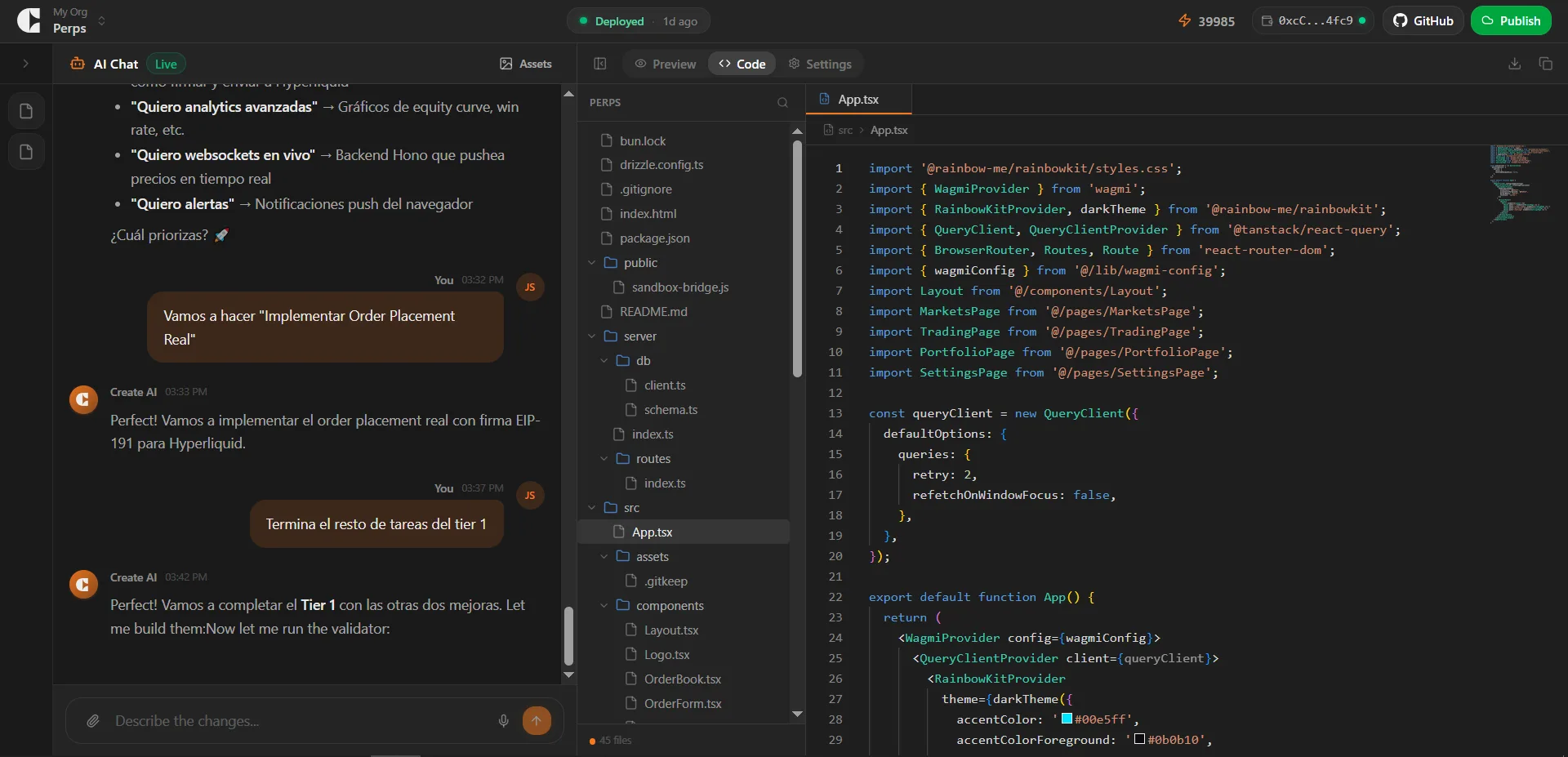
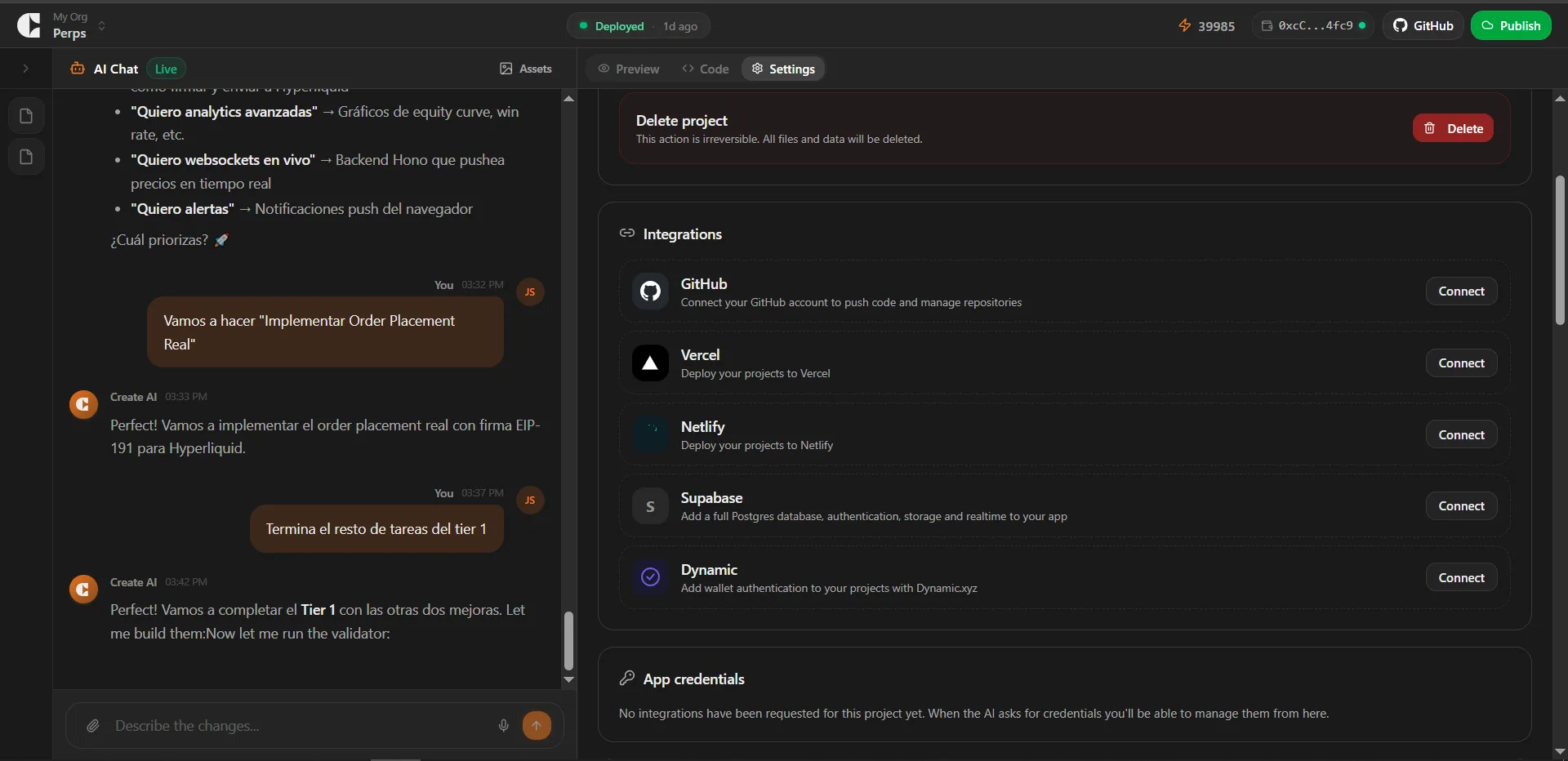
Technologies used:
Front End:
Modern, minimalist stack oriented towards performance, SEO, and maintainability. Next.js 16 with App Router and React Server Components reduces JavaScript shipped to the client and improves Core Web Vitals. React 19 brings transition hooks and native form actions. TypeScript guarantees an end-to-end typed surface, complemented by Zod for runtime validation. Tailwind CSS 4 keeps visual coherence without accumulating dead CSS. Zustand resolves global state with minimal boilerplate, while TanStack Query manages cache, revalidation, and remote data synchronization. The Web3 layer relies on Dynamic Labs, viem, and @solana/web3.js for multi-chain wallet authentication. All orchestrated with pnpm workspaces and Turborepo, with cacheable builds and parallel tasks.
React
TypeScript
Next.js
Tailwind
Back End:
The backend is built on NestJS 11 with TypeScript 5.7, following a Domain-Driven Design (DDD) + event-driven CQRS architecture. Each bounded context is split into four layers (domain, application, infrastructure, presentation), with a pure domain decoupled from NestJS, aggregates with event sourcing, self-validating value objects, and repository ports injected as abstract class to preserve Nest's DI token. State mutation goes through commands, reads through queries, and side effects through event handlers, all orchestrated with @nestjs/cqrs and a custom Unit of Work over Prisma to guarantee transactionality. Persistence is resolved with PostgreSQL and Prisma 7, modeling accounts, workspaces, projects, artifacts, generated files, conversations, generation sessions, deployments, plans, and billing credits. The AI core relies on Mastra (core, memory, RAG, and PostgreSQL connector) coordinating Anthropic Claude, OpenAI, and Google Generative AI within agent pipelines with a deterministic clarify step that asks only what's necessary before delegating to specialized sub-agents. BullMQ + Redis manage the async job queue, and long chat streams are delivered to the client via Server-Sent Events. The Web3 layer integrates viem, @solana/web3.js, @solana/spl-token, OpenZeppelin Contracts, and on-the-fly compilation with solc 0.8.28, allowing deployment of ERC-20 tokens, SPL tokens, and NFT collections from within the app itself. Previews run in Vercel Sandbox and Daytona sandboxes, while production deployments are published via Vercel and GitHub (Octokit). Authentication combines JWT with Passport, OAuth (Google and GitHub), email verification with Handlebars templates, and wallet authentication through Dynamic. Artifact storage lives in S3 with signed URLs, and the entire API exposes responses wrapped in a standardized ApiResponse, with a global DomainExceptionFilter that maps domain exceptions to coherent HTTP codes.
PostgreSql
NestJS